Adaptive to the topic
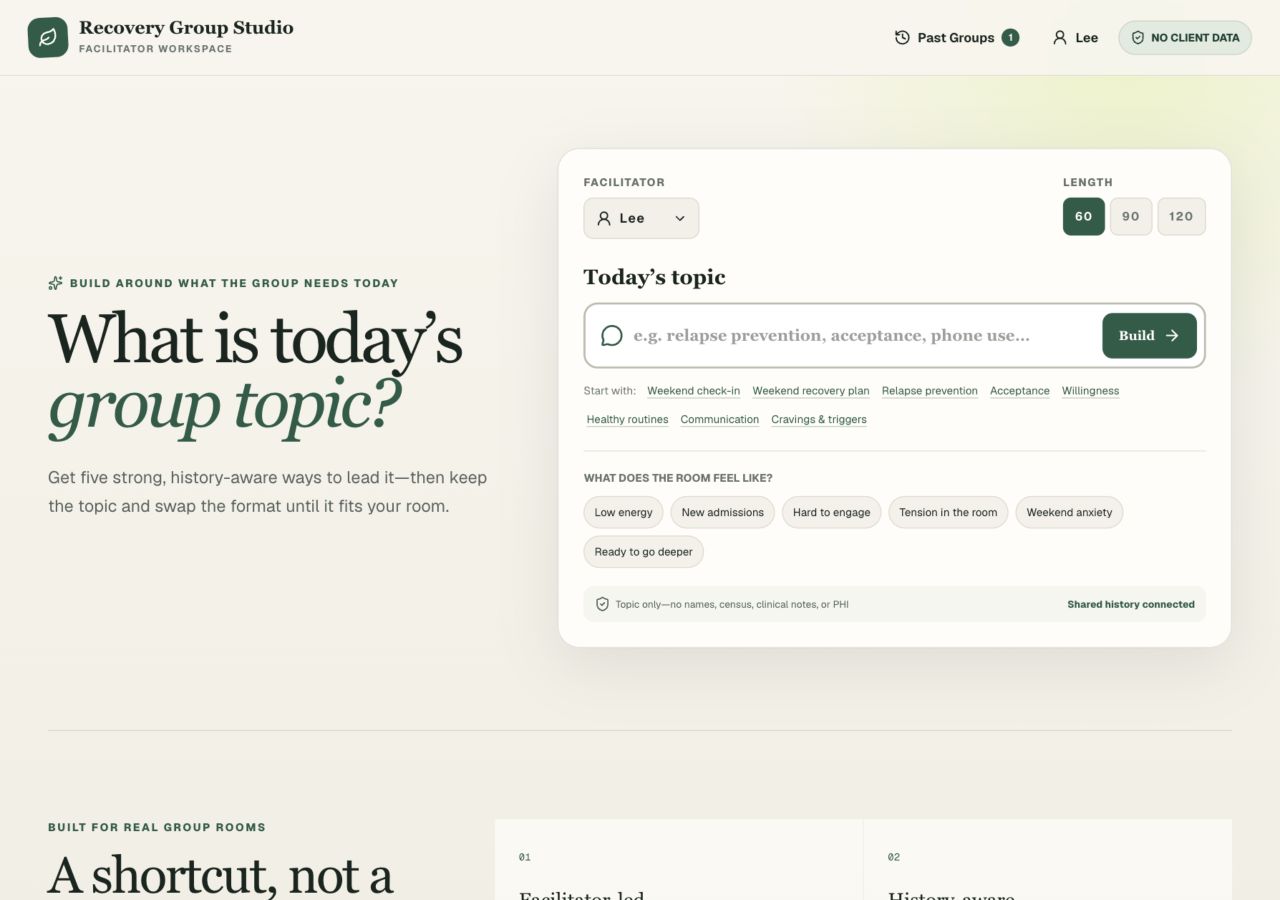
Enter a topic, real-life room challenge, or YouTube link. The studio builds five genuinely different, topic-specific directions—not fixed templates.
Built for substance-use treatment programs
Turn any topic, room challenge, or YouTube video into an adaptive, ready-to-lead session with facilitator guidance, client materials, and a Clinical Notes Assistant for editable, facilitator-reviewed post-group note drafts.
One topic in. Five relevant directions out.
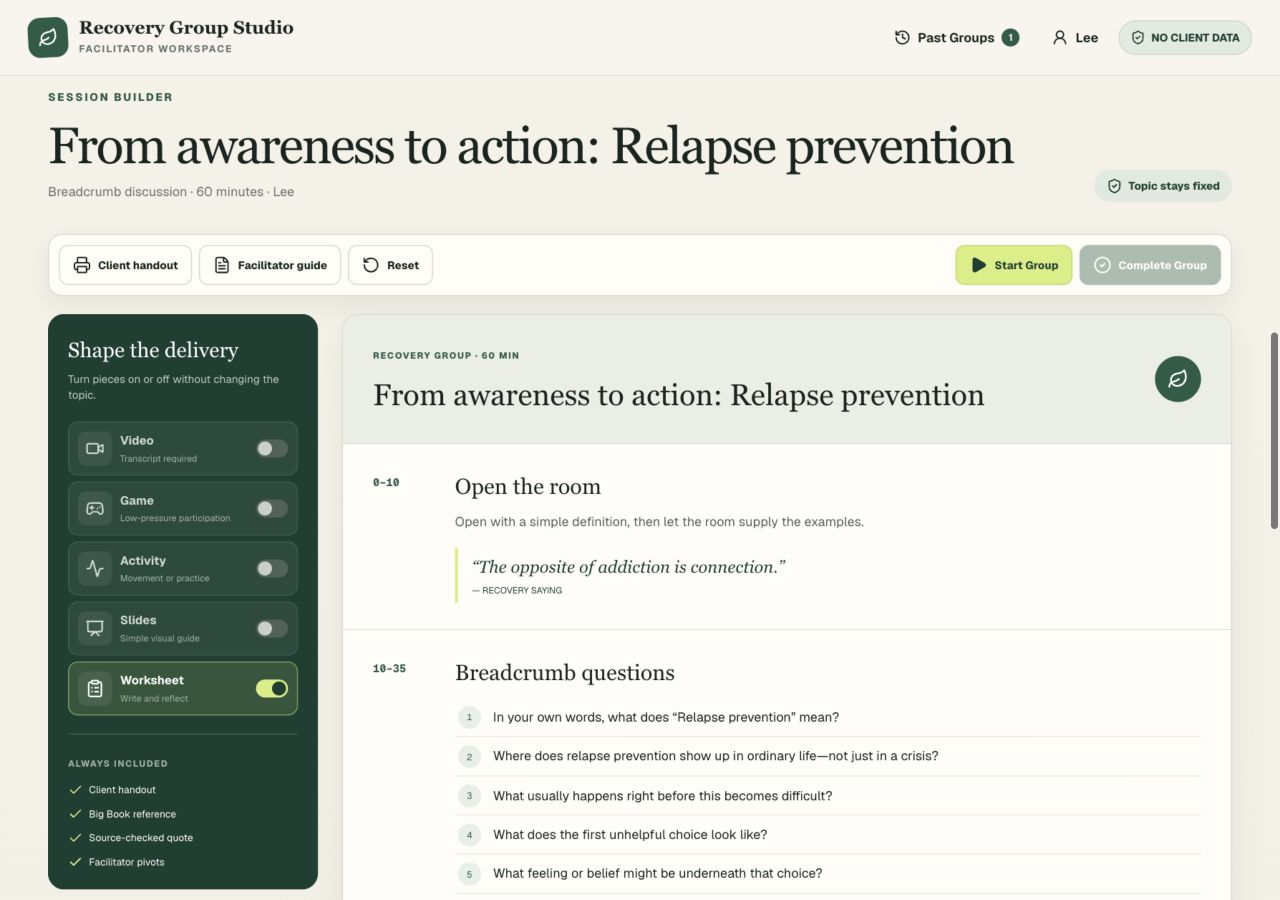
One approved direction. A complete session built around it.
One facilitated group. Editable documentation drafts afterward.
One connected workspace
Recovery Group Studio gives teams a repeatable workflow without flattening every facilitator into the same script.
Enter a topic, real-life room challenge, or YouTube link. The studio builds five genuinely different, topic-specific directions—not fixed templates.
Facilitator profiles shape tone, questions, pacing, preferred formats, therapeutic approaches, and recovery pathways without implying training someone does not have.
When a YouTube video is used, the transcript becomes part of the session foundation so questions, pause points, and discussion stay connected to what clients actually watched.
Create a facilitator guide, client handout, worksheet, activity, game, and optional TV slides from the same approved session direction.
Turn facilitator-confirmed observations and interventions into editable group descriptions and individual note drafts. Review every draft, then copy plain text into your organization’s own EMR.
Shared past-group history helps teams avoid repeating stale sessions while still revisiting important topics in a fresh way.
The working rhythm
From the need in the room to the final editable draft, every step stays connected to the same topic and direction.
Enter any topic, situation, group challenge, or YouTube link. Review the topic foundation and choose from five adaptive directions.
Shape the delivery with breadcrumb questions, facilitator pivots, activities, videos, games, worksheets, handouts, and optional TV slides.
Select only the presentation and interventions you actually observed. The assistant creates editable group and individual note drafts for facilitator review before anything is copied into the EMR.
Built for real group rooms
Plan around the facilitator, available preparation time, session length, group size, participation format, and what the room feels like right now.
A planning workspace—not a replacement for judgment
Recovery Group Studio helps trained staff prepare, adapt, facilitate, and draft. It does not diagnose, make individualized treatment decisions, or replace clinical supervision, organizational policy, emergency procedures, or the final documentation review.
Common questions
No. It creates editable drafts from facilitator-confirmed observations. A facilitator must review every draft before copying it into the organization’s existing EMR, where the final clinical record remains.
The product is designed around topics and facilitator-confirmed observations—not client names, census details, diagnoses, or other identifiers.
No. Facilities and facilitators can shape sessions around their program model, therapeutic approaches, and recovery pathways, including twelve-step, secular, SMART Recovery, Recovery Dharma, faith-integrated, and peer-led approaches.
Yes. Facility workspaces share past-group history while each facilitator keeps an individual profile and delivery style.
30-day private beta